
Automation in Thermoset Molding Processing
Comments Off on Automation in Thermoset Molding ProcessingIn support of high-volume molding programs, Woodland Plastics offers various automation options in its manufacturing production to increase throughput, reduce costs, improving workforce safety, and remain competitive against global competitors. Woodland Plastics has developed and implemented a variety of automation processes into it’s business including both automation during molding such as press-side robotics and end of arm tooling, as well as automation in secondary processes such as automated inline deflash equipment and vision inspection systems. Applications that make sense to implement automation include high volume programs that require excellent efficiency, parts that require 100% inspection, or components needing a high throughput of secondary deflash to keep up cycle times with the molding presses. (more…)
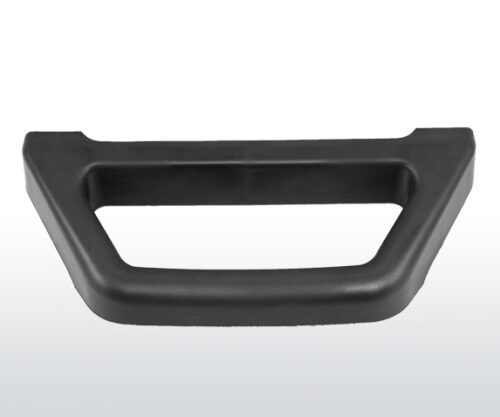 Thermosets, or thermoset composites, are molding materials specified towards a variety of home appliance products and applications. Thermoset materials including BMC and Phenolic are selected as a material of choice in these applications for their high heat and chemical resistance properties. Many home appliances and cookware products incorporate heating elements or electrical connections to power the products.
 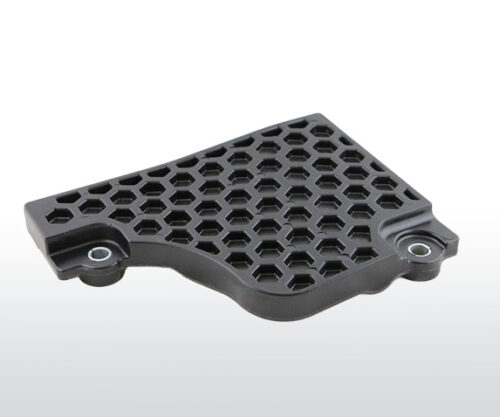 Did you know that thermosets offer exceptional chemical resistance? Whether your application is exposed to solvents, acids, oils, automotive fluids, hydraulic fluids, or water/moisture or salt water run-off, thermoset parts remain strong, durable, and dimensionally stable throughout the life of the part, and do not degrade. This longevity makes thermosets a useful material choice for molding applications in automotive powertrain and transmission components, fuel system components, battery components, as well as appliance components and housings, industrial pump housings and pump components, and components used in the oil/gas industry.
 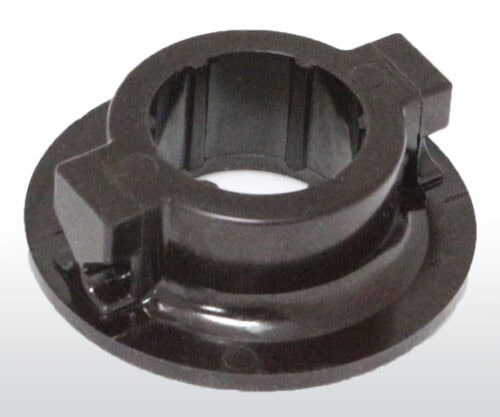 Why are thermosets commonly used as a molding material for electrical parts and component assemblies? Molded thermosets provide exceptional electrical properties such as electrical stability, high dielectric and insulation strength, and resistance to arc and track to protect internal components from potential damage caused by electrical charge or current and arc/track.
 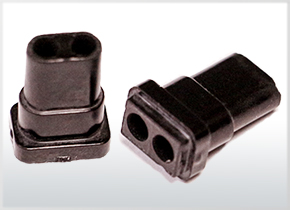 Whereas a thermoplastic may degrade, disfigure, or ignite; thermosets such as unsaturated polyester BMC and phenolic molding compounds remain durable and strong when exposed to such electrical elements. From a cost comparison, thermosets are a great high volume commercial option available at a low cost per lb. compared to engineered thermoplastics with similar type of electrical and heat resistant properties. Common thermoset materials used in electrical applications include both phenolic and bulk molding compounds (BMC).
 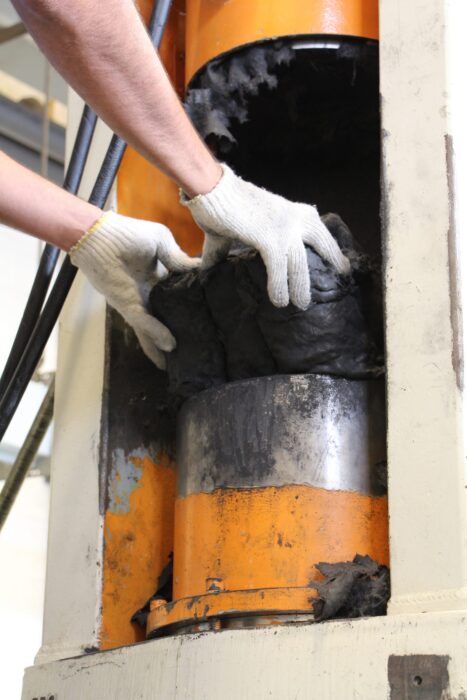 BMCs, or Bulk Molding Compounds, are a type of thermoset material that are unsaturated polyesters or vinyl esters, and may be injection molded on horizontal molding machines. The properties of BMC molded parts exhibit exceptional dielectric strength, electrical insulation, heat resistance, and chemical resistance lending BMCs to be molded in a variety of safety-critical applications and component assemblies within the Electrical, Automotive, and Industrial markets. In its raw state, BMC resembles a play-dough like form and is filled with glass fibers or mineral fillers dispersed within the resin system to provide strength. Molding wise, BMCs are more commonly injection molded, but can also be compression or transfer molded. Injection molding BMCs require the use of a stuffer or ram to help inject material into the screw and barrel to preheat and plasticize prior to injecting into the molds.
 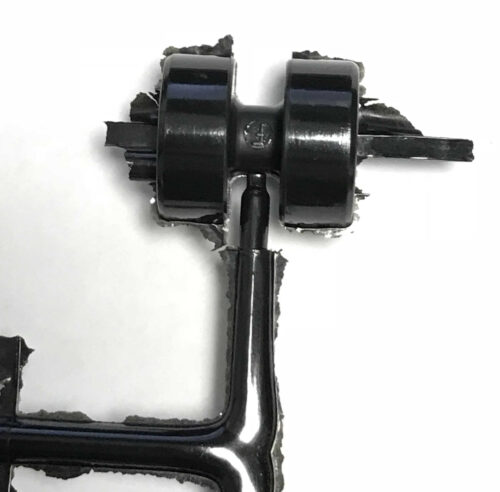 As a performance grade composite, thermoset plastics are used in a variety of challenging automotive environments and applications. Thermosets provide excellent heat resistance and temperature deflection to avoid deforming or degradation when exposed to high operating temperatures. Utilizing an injection molding process with thermoset not only gives an automotive part the physical and durability properties, but provides a high-throughput option for high volume programs that require large outputs of product. Injection molding thermosets use faster cycle times than compression, and injection molds can built with higher cavitation as well. Automotive applications that rely on injection molded thermoset parts include powertrain and
 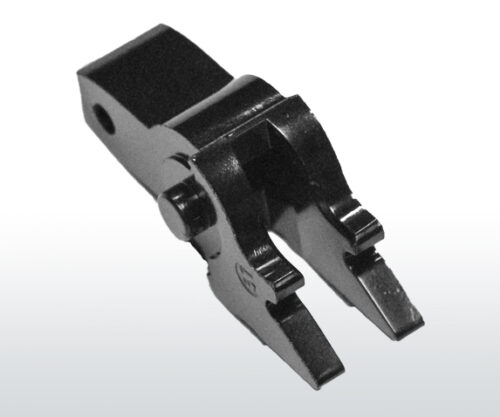 Phenolic, or phenolic molding compound, is a type of thermoset molding material. Phenolic materials have history dating all the way back to the original plastic, Bakelite, that derived from Leo Baekeland in the early 1900s. Even with a long history, phenolic thermosets are still commonly molded today for different applications and end products requiring heat resistance, electrical strength, and chemical resistance. Molded phenolic components exude excellent dielectric strength and electrical insulation, heat resistance, and chemical resistance. These properties allow phenolics to be molded for a variety of safety-critical components in Electrical, Automotive, and Industrial markets. Phenolics are compounded into a similar shape prior to molding as thermoplastics, in that they are compounded into in a granular form; filled with glass fibers, minerals, or bead fillers dispersed within the resin. Molding wise, phenolics are generally injection molded, but can also be compression or transfer molded. Injection molding phenolics require the use of a molding machine with a screw and barrel to plasticize the material prior to injection.