
Deflashing Thermoset Parts
Comments Off on Deflashing Thermoset PartsWhile thermoplastic and thermoset molded parts may appear similar, one difference between molded parts is that thermoset parts are molded with excess material or “flash”, and must be deflashed after they are molded, whereas thermoplastics are molded without excess flash. Flash is excess molding material needed in thermoset molding to fully form a part and avoid bad or rejected parts. In order to mold a full part, thermosets must be molded with excess material flash, otherwise the part integrity may be jeopardized by shorts, burns or other molding defects. Regardless of whether a molded thermoset part is molded into basic or complex geometries, it will always require a secondary deflash operation. Removing the excess flash can be done in a variety of ways, depending on what is most suitable to the part and volume requirements. (more…)
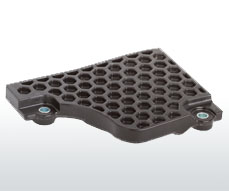 Thermosets are a material of choice for some automotive applications due to the unique material properties that thermoset composites offer. Thermosets are able to be injection or compression molded, lending themselves to complex geometries that may be difficult or costly to achieve in metal or stainless steel. Property-wise, thermosets have chemical resistance against many types of automotive fluids such as oils, transmission fluids, and coolants. Whereas a thermoplastic molded part may degrade in such chemicals, thermoset parts remain durable and strong, allowing a product assembly to remain safe for use. Another material benefit of thermoset composites towards automotive applications is thermosets heat resistance and ability to withstand high operating temperatures.
 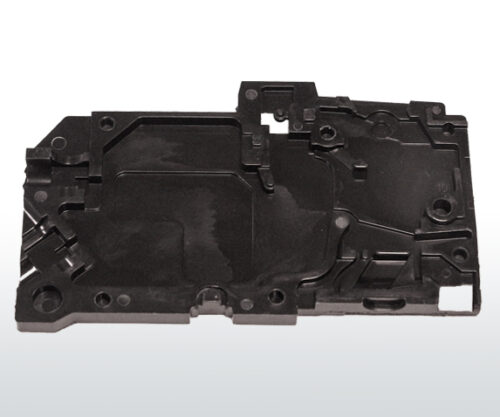 Thermosets are performance-grade composites or plastics, suitable for molded parts used in challenging and aggressive environments. Parts exposed to electrical current and high operating temperatures have long been molded with thermosets due to the materials’ physical and chemical stability. Thermosets remain durable in electrical applications and exhibit strong dielectric insulation, making them suitable for electrical covers, circuit breakers, terminal blocks, and other electrical components housing internal components or electrical wiring. With superior electrical properties over many engineered thermoplastics, thermosets are an excellent, low-cost material choice for electrical parts or assemblies that may experience electrical voltage, elevated temperatures, or thermal shock.
 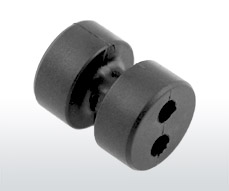 As a performance-based material, thermoset composites offer molded components with material property advantages of chemical resistance, corrosion resistance, and the ability to remain dimensionally stable and durable within applications experiencing high heat and operating temperatures. These properties allow molded thermoset parts to be used in automotive applications exposed to tough environments where thermoplastic components could degrade and/or compromise the safety and performance of a product assembly. Due to the safety nature of automobiles and rigorous testing components must pass, automotive under the hood and structural applications have long used molded thermoset parts and components.